

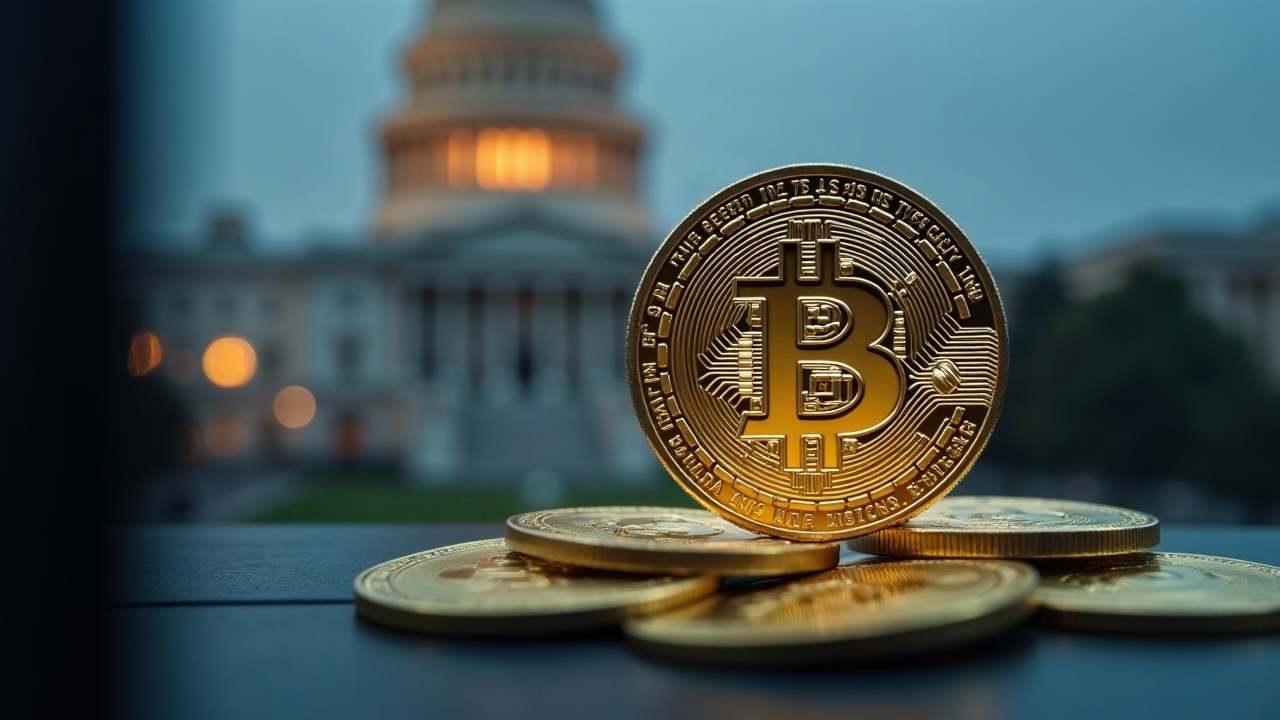
The American Reserve Modernization Act of 2026 has moved onto the House calendar, advancing legislation that would put the U.S. Strategic Bitcoin Reserve on a statutory footing. H.R. 8957 was formally reported by the House Financial Services Committee on November 24 and placed on Union Calendar No. 789. The bill is now available for House consideration but has not passed the chamber and no floor vote has been announced.
Rep. Nick Begich introduced the legislation in May, and it now has 23 cosponsors — 22 Republicans and Democratic Rep. Jared Golden. The Financial Services Committee previously voted 28–21 on September 16 to report the amended legislation favorably. The November development completes the committee reporting stage rather than representing a new committee vote or final legislative approval.
Reserve Bitcoin Would Face a 20-Year Hold
If enacted, Treasury would have 180 days to establish both a Strategic Bitcoin Reserve and a separate Digital Asset Stockpile. Qualifying Bitcoin — federal BTC that is legally owned by the government and not required for another statutory purpose — would move into the reserve, while qualifying non-Bitcoin digital assets would be managed separately. The framework therefore applies to eligible government property, not every bitcoin temporarily held, seized or controlled by a federal agency.
The reported bill would require Bitcoin deposited in the reserve to remain there for at least 20 years from enactment. During that period, reserve BTC could not be sold, swapped, auctioned, encumbered or otherwise disposed of. Two years before the period expires, Treasury would submit recommendations to Congress on whether to continue holding the assets or begin a controlled release. After 20 years, the secretary could recommend sales of up to 10% of reserve assets during any two-year period rather than receiving an automatic mandate to liquidate them.
That provision builds on the structure examined when the House committee first took up the Bitcoin reserve bill. The current reported text preserves the long holding period while moving the proposal one procedural step closer to possible House consideration.
Proof of Reserve Would Add Statutory Oversight
H.R. 8957 would also require Treasury to establish a public cryptographic proof-of-reserve system. Treasury would publish annual information on holdings, transactions and control of private keys, with an independent third-party auditor verifying the report and the Comptroller General overseeing compliance. The bill therefore combines long-term retention with recurring reporting rather than leaving reserve management solely to executive discretion.
The legislation does not itself authorize a government Bitcoin buying program. Instead, Treasury and Commerce would study whether additional BTC could be acquired through lawful, budget-neutral mechanisms without increasing the national debt or imposing net costs on taxpayers. The study provision examines possible future acquisition strategies; it is not authorization to borrow, impose new taxes or use deficit spending to purchase Bitcoin.
That differs from reserve models where publicly reported balances can continue changing through ongoing inflows, including El Salvador’s disclosed Bitcoin holdings. The U.S. proposal is primarily a custody, retention and oversight framework for qualifying federal assets rather than a legislated recurring purchase schedule.
The bill follows the March 6, 2025 executive order that already established a Strategic Bitcoin Reserve and directed Treasury and Commerce to consider budget-neutral acquisition strategies. H.R. 8957 would move key elements of that policy into federal statute, but it must still pass both chambers in identical form and receive presidential approval before its 20-year holding rule or statutory proof-of-reserve requirements become law.

Jack Reynolds is SatoshiPick’s infrastructure mind. Based in Denmark, he follows Bitcoin, Ethereum, Layer 1 networks, stablecoins and DeFi with a practical question always in the background: does this actually make crypto work better?
His articles focus on the systems beneath the headlines: settlement rails, protocol upgrades, stablecoin usage, DeFi coordination and the regulatory limits around them. Jack avoids turning technical coverage into a maze. He explains what is live, what is still experimental and why the difference matters.