

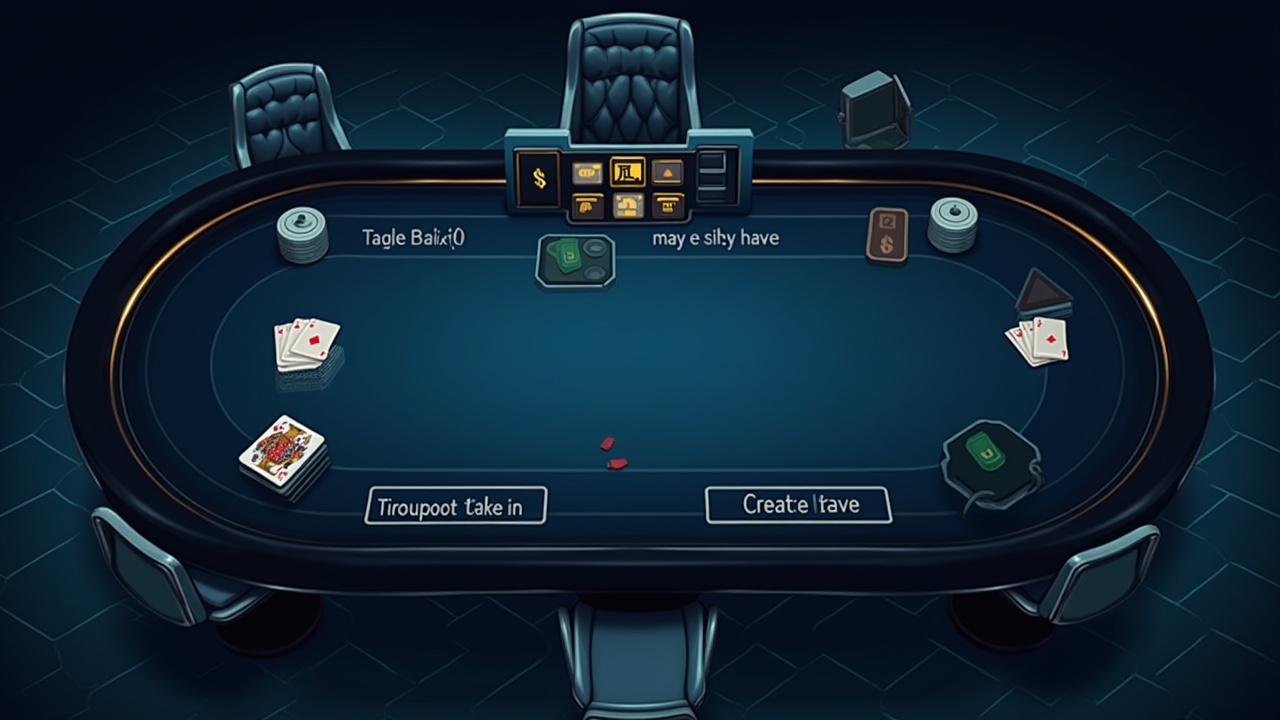
Stacked Poker launched its on-chain poker platform on Base mainnet in May 2026, with public launch posts circulating on May 18, 2026 and the product page presenting live USDC-based real-money tables. The official product page describes Stacked as browser-based poker using USDC on Base, with social or wallet sign-in and link-based table access. Stacked’s documentation confirms that real-money tables are USDC-backed, settle on-chain and require a connected wallet, USDC on Base and a small amount of ETH on Base for gas.
Stacked launches USDC poker tables on Base
Stacked’s official materials say hosts can create tables, set stakes, choose free-play or real-money mode, and make tables public or invite-only through direct links. The platform says hosts earn 25% of the rake on real-money hands, while the documentation states that Stacked sponsors deployment gas for new table contracts. Those claims describe Stacked’s own operating model; they are not independent verification of liquidity, player demand or revenue generation.
The access language needs tighter legal framing. Stacked’s site markets the product as “No Signup” and “No KYC,” and its FAQ says users do not need KYC. However, the availability page says the geographic list is still being finalized, that some jurisdictions block access to online poker by law, and that users are responsible for knowing whether real-money online poker is permitted where they are. The same page says Stacked does not operate in jurisdictions subject to comprehensive U.S., U.K. or EU sanctions, with the specific list still pending.
Stacked’s public documentation does not show a gaming license, regulator registration or jurisdiction-specific authorization in the material reviewed. The accurate formulation is that the platform claims a no-KYC, wallet-based access model, while real-money poker remains subject to local gambling, sanctions, tax, consumer-protection and crypto-asset rules. Users should not interpret the absence of application-layer KYC as confirmation that participation is lawful in their jurisdiction.
Contract custody, settlement and user risk
The custody model is documented at the table-contract level. Stacked says every real-money table deploys its own smart contract on Base when the host creates the table; player buy-ins move into that table contract, hand settlements update seat balances on-chain, and withdrawals return funds to the user’s wallet. Stacked’s custody documentation also says the deployed table rules cannot be changed, there is no admin override or upgrade hook, and the contract can release funds only to the player wallet, platform fee recipient or host rake balance under contract rules.
The deployed-contract references require precision. Stacked’s documentation lists the Base USDC token contract as 0x833589fCD6eDb6E08f4c7C32D4f71b54bdA02913 and says production table contracts are deployed on demand when a host creates a table. It also says the factory address is “coming soon,” and that each per-table contract address is visible inside that table’s settings. The product page shows a live example contract in truncated form, 0x7a2c…f91d, but the reviewed public page does not expose the full address in the rendered text.
The settlement flow is partly on-chain and partly off-chain. Stacked says the backend runs the game, deals cards and reports hand outcomes to the contract, while the contract applies the reported result and updates balances. The documentation says withdrawals require two steps: the player leaves between hands, then signs a withdrawal transaction, and the contract sends the stack back to the wallet. If settlement stalls for 24 hours, the FAQ says users can withdraw through an emergency-exit path without Stacked involvement.
Security claims also need limits. Stacked says its contracts are source-verified on Basescan and have extensive unit-test coverage, but the FAQ states that the contracts have not yet been externally audited and that provably fair or on-chain shuffling remains on the roadmap. The platform’s current design therefore still carries smart-contract risk, backend/game-engine risk, randomness and fairness risk, wallet-signing risk, USDC approval risk, Base network risk and regulatory risk tied to real-money gambling.
The confirmed status is narrow: Stacked Poker is live as a browser-based poker product using USDC on Base, with per-table smart-contract custody and host-created real-money tables. The stronger claims around instant access, no KYC and no custody risk remain Stacked’s product positioning and are constrained by jurisdictional availability, sanctions compliance, unaudited smart-contract exposure, backend settlement design and local rules governing real-money online poker.

Owen Bennett covers crypto’s most restless corners: altcoins, memecoins, airdrops, launchpads, NFTs and gaming. Based in Canada, he follows the markets where communities form quickly, attention rotates without warning and a real catalyst can sit next to a mountain of hype.
Owen’s job is to sort the signal from the spectacle. He looks at launches, retail rotations, community traction, token ecosystems and speculative narratives without dressing every project up as the next big winner. His writing keeps the energy of these sectors, but with enough distance to avoid getting swept away by them.