

The metaverse did not disappear. Its most visible version simply asked people to make an unreasonable trade. Users had to leave familiar screens, wear costly headsets, and enter largely empty digital spaces. In return, they received avatars, virtual meetings, and speculative property markets that rarely improved ordinary life.
That model confused immersion with usefulness. A successful digital platform removes friction. Early metaverse products often added it. Their failure does not prove spatial computing lacks value. It shows people do not want a replacement world when technology can improve the one they already occupy.
Meta’s changing Horizon Worlds strategy captures that lesson. The company planned to end Quest access and shift Horizon toward mobile. It then preserved existing VR games after users protested, while keeping future development focused on mobile. Meta no longer treats one social VR universe as the inevitable gateway to digital life.
Mixed Reality Solves a Behavioral Problem
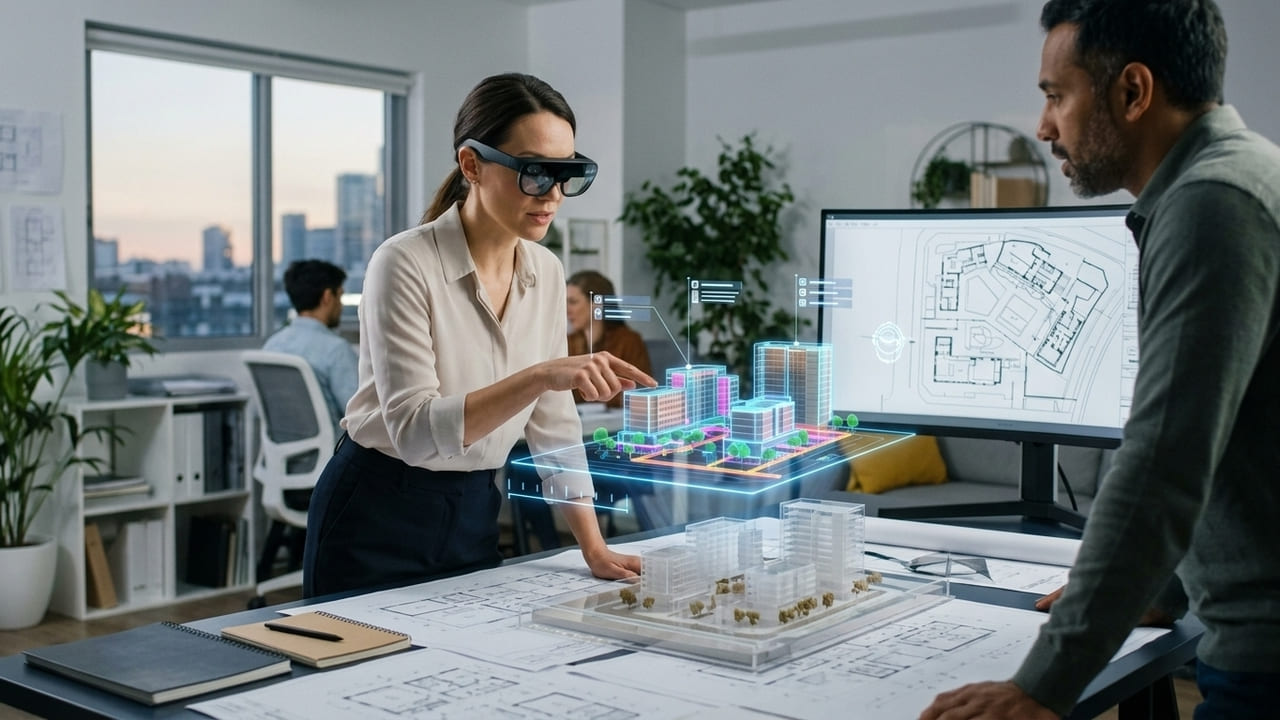
Mixed reality offers a stronger path since it does not demand complete withdrawal from physical surroundings. It places digital objects, instructions, screens, and information inside the user’s actual environment. People can still see colleagues, equipment, rooms, and risks around them.
Virtual reality asks users to adopt a destination. Mixed reality acts as a tool. A technician can view repair instructions beside a machine. A medical team can inspect a spatial model. Designers can place a prototype inside a real room before building it.
Current spatial-computing platforms increasingly emphasize these practical uses. Apple presents its headset around design reviews, training, healthcare, retail layouts, and collaborative work. Google’s Android XR development focuses on persistent applications, visible hands, room-aware interfaces, and lighter eyewear. Neither approach depends on persuading users to buy a digital plot.
Mixed reality, therefore lowers the behavioral cost of participation. It makes spatial computing useful for short, specific tasks. Users do not need to “live” in the metaverse. They can enter a digital layer when it helps, then leave without abandoning their physical context.
Virtual Land Mistook Scarcity for Demand
Virtual land represented the weakest part of the earlier metaverse thesis. Platforms divided digital maps into limited parcels, then treated scarcity as a source of lasting value. Buyers expected traffic, advertising, rentals, and status to make those parcels valuable.
However, digital scarcity only matters when a platform has durable demand. Empty coordinates do not gain utility merely through blockchain ownership. Research into Decentraland found that traditional location-based pricing weakened during the 2021 hype cycle. Short-term speculation became a stronger driver, while later entrants often suffered losses.
That pattern exposed a basic flaw. Virtual land tried to import physical property economics into software. Real land has natural limits. Digital space can expand, duplicate, or move. Its value comes from users, experiences, and access, not coordinates alone.
Mixed reality reverses that logic. It starts with valuable physical locations, objects, and activities. Digital content gains relevance through context. A repair overlay matters since it appears on the correct machine. A retail model matters since it fits the actual store. Utility creates value before scarcity enters the discussion.
The Metaverse Is Becoming an Interface
The metaverse’s comeback will probably arrive without the word “metaverse.” Companies increasingly prefer terms such as spatial computing, extended reality, and intelligent eyewear. That shift reflects a different product philosophy.
The old vision promised one expansive virtual destination. The emerging model distributes digital experiences across workplaces, homes, streets, vehicles, and public spaces. Instead of owning virtual land, users may interact with persistent digital objects anchored to real environments.
This model still carries serious risks. Mixed-reality devices rely on spatial and body-based information, including eye movements and environmental mapping. Weak governance could turn useful interfaces into powerful surveillance systems. Hardware cost, comfort, battery life, and interoperability also remain unresolved.
Even so, mixed reality gives spatial computing a clearer reason to exist. It does not ask people to replace reality with a branded world. It adds a responsive digital layer to tasks people already perform.
The metaverse is returning, but not as an endless property market filled with avatars. It is returning as an interface, less theatrical, more practical, and far closer to everyday life.

I write about blockchain, Web3, and the cryptocurrency industry, covering everything from the latest market developments to the technologies shaping the future of digital finance. I’m particularly interested in explaining complex topics in a way that’s clear, practical, and easy to follow.
Whether I’m covering breaking news or exploring broader industry trends, my goal is to create content that keeps readers informed without losing sight of the bigger picture. I enjoy following the constant evolution of the crypto space and turning it into stories that are both insightful and accessible.