

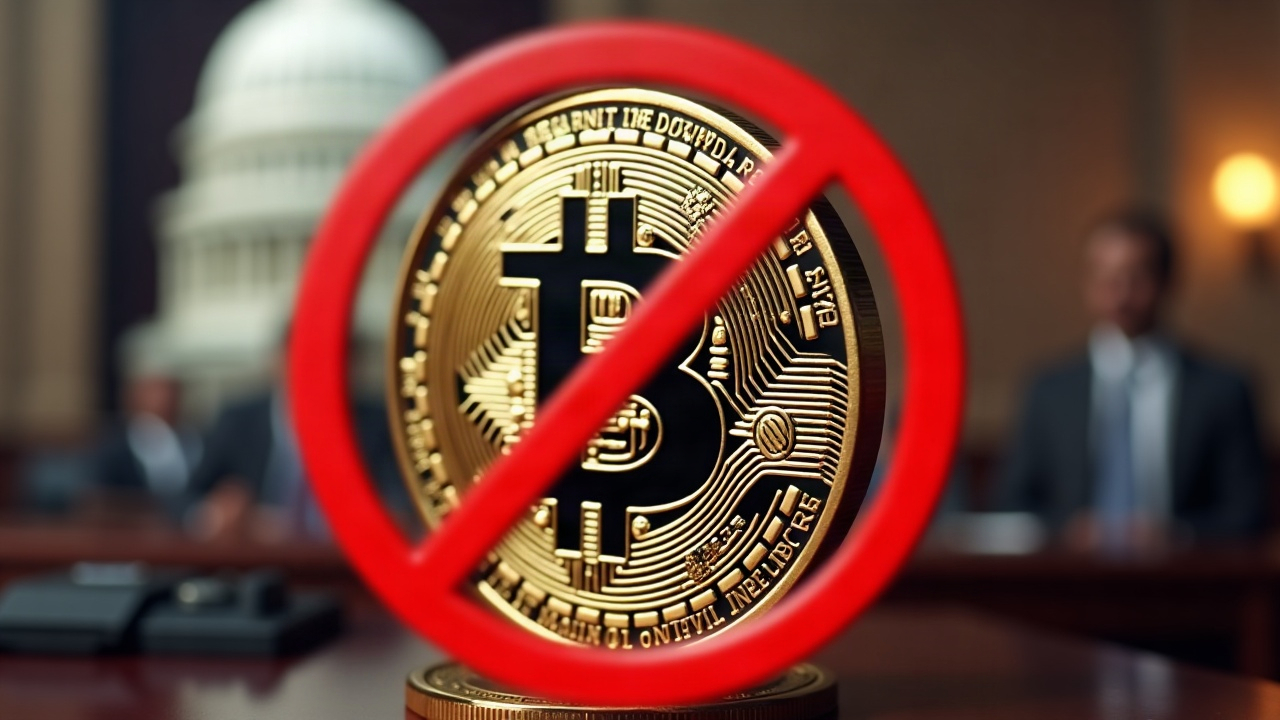
The U.S. Senate has blocked an attempt to advance the Digital Asset Market Clarity Act, delivering a major procedural setback to comprehensive crypto market-structure legislation. The cloture motion on proceeding to H.R. 3633 failed 49-50 on September 15, short of the 60 votes required to move into formal Senate consideration. The result is recorded on the Senate’s official roll-call vote page.
The vote was not final passage of the bill. Cloture would have ended the procedural barrier to taking up H.R. 3633, after which senators could have debated and amended the legislation before any eventual passage vote. Republicans Susan Collins, Josh Hawley, Jerry Moran and Thom Tillis joined Democrats in opposing cloture, while Democratic Sen. Chris Coons did not vote. Tillis switched from yes to no so he could preserve the ability to seek reconsideration.
Ethics Dispute Blocks Bipartisan Support
Senate Republicans released revised text shortly before the vote after months of negotiations. The final draft incorporated 126 substantive changes that Republican negotiators said had been requested by Democrats, including stronger restrictions on public officials profiting from crypto ventures and additional enforcement authority for state attorneys general. Banking concerns over stablecoin rewards also remained unresolved.
Those concessions did not secure the required votes. Democratic negotiators continued to seek stronger ethics protections, including requirements addressing divestment from crypto holdings, while bank trade groups argued that stablecoin rewards could compete with deposits and potentially affect lending. Republican supporters said the revised package represented substantial compromise; Democratic opponents maintained that important safeguards remained insufficient.
The bill would establish a broader federal framework governing digital-asset markets and clarify responsibilities between the SEC and CFTC. Its failure to clear cloture leaves those market-structure questions governed for now by existing statutes, agency interpretations, rulemaking and enforcement, rather than the comprehensive statutory framework envisioned by H.R. 3633. Payment stablecoins are separately covered by the GENIUS Act, which became law in July 2025.
CLARITY Act Faces a Narrow Calendar
Crypto markets and related equities weakened as the vote failed. Bitcoin fell more than 5% as the outcome became apparent, while Coinbase and Circle shares dropped as much as 10% during the session, although broader markets were also contending with rising Treasury yields, higher oil prices and Federal Reserve expectations. The timing therefore does not establish the Senate vote as the sole cause of those market moves.
The legislative calendar now creates a substantial practical obstacle. The Senate’s scheduled state work period begins October 5 and runs through November 6, covering the weeks leading into the November midterm elections. Reuters described the bill as effectively “on ice,” although Tillis’ procedural vote means reconsideration remains technically possible.
Sen. Cynthia Lummis had previously described the current work period as the Senate’s last realistic opportunity to advance the legislation. The immediate question is therefore whether Senate leaders can reopen negotiations and assemble 60 votes before the chamber leaves Washington, rather than whether the September 15 vote itself formally killed H.R. 3633. If no new vote occurs, broader market-structure legislation would remain pending while federal agencies continue operating under their existing authorities.

Jack Reynolds is SatoshiPick’s infrastructure mind. Based in Denmark, he follows Bitcoin, Ethereum, Layer 1 networks, stablecoins and DeFi with a practical question always in the background: does this actually make crypto work better?
His articles focus on the systems beneath the headlines: settlement rails, protocol upgrades, stablecoin usage, DeFi coordination and the regulatory limits around them. Jack avoids turning technical coverage into a maze. He explains what is live, what is still experimental and why the difference matters.